
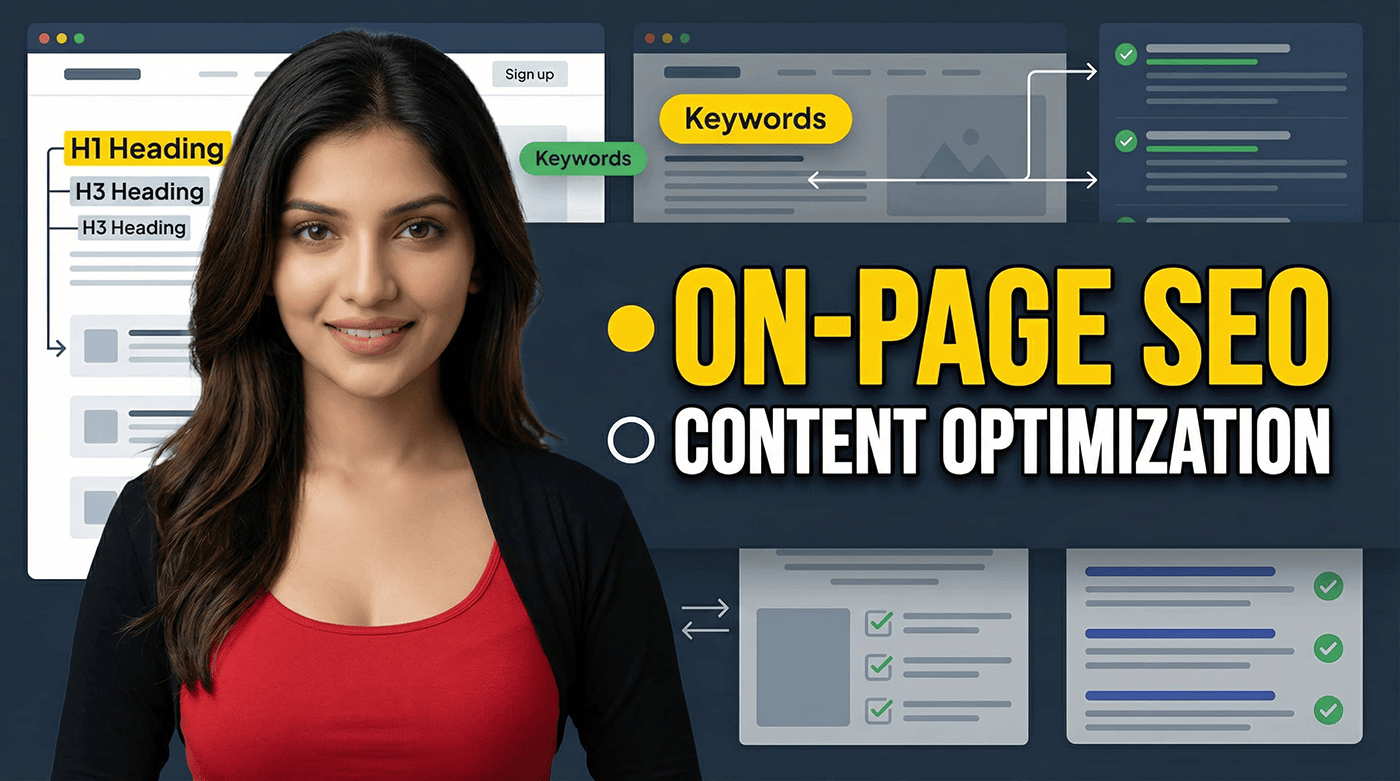
On-Page SEO & Content Optimization Hub
What Is On-Page SEO and Why It Drives Rankings
On-page SEO refers to the optimization of individual web pages so that search engines clearly understand their relevance and users find them genuinely valuable. It focuses on aligning content, structure, and intent to ensure a page communicates the right message to both algorithms and human readers.
While technical SEO ensures that pages can be accessed and off-page SEO builds authority, on-page SEO determines relevance. It signals what a page is about, who it is intended for, and why it deserves to rank for specific queries.
For a broader understanding of how on-page optimization fits into the bigger picture, it is essential to first master
search engine optimisation techniques that form the foundation of sustainable SEO performance.
Strong on-page SEO improves keyword visibility, increases click-through rates from search results, enhances user engagement and dwell time, and supports higher conversion performance.
Benefit: Turn every page into a clear ranking and conversion signal.
How Search Engines Interpret On-Page Content
Modern search engines no longer rank pages based on keywords alone. They evaluate context, structure, and how well content aligns with user intent. A page is assessed as a complete entity rather than a collection of isolated terms.
Key interpretation signals include topic clarity, depth of content coverage, semantic relationships between concepts, internal linking context, and measurable user engagement behavior. On-page optimization aligns all these signals into a single, cohesive message that search engines can trust.
Benefit: Improve ranking consistency across competitive keywords.
Keyword Research and Intent Mapping
Effective on-page SEO begins before content is written. Keyword research and intent mapping form the foundation of relevance, ensuring that content answers the right questions for the right audience.
Understanding Keyword Intent
Every search query reflects intent. Informational keywords signal a desire to learn, commercial queries indicate comparison and evaluation, while transactional searches show readiness to act. Content that fails to match intent may struggle to rank and rarely converts.
Strategic Keyword Placement
Once intent is defined, keywords must be placed strategically and naturally. Effective placement includes page titles and meta descriptions, primary headings, opening and closing paragraphs, image alt text, and internal anchor links. Keyword usage should always feel contextual rather than forced.
Benefit: Rank for keywords that align with real user intent and conversion potential.
Title Tags and Meta Descriptions Optimization
Title tags and meta descriptions form the first impression of a page in search results. They directly influence whether users choose to click, even when rankings remain unchanged.
SEO-Friendly Title Tags
Effective title tags stay within recommended pixel limits, align closely with primary keywords, communicate a clear benefit, and remain unique across the website. A strong title balances relevance with appeal.
High-CTR Meta Descriptions
Well-written meta descriptions reinforce search intent, highlight value, and encourage action without relying on clickbait. Optimized snippets can significantly increase organic traffic without requiring ranking improvements.
Benefit: Earn more clicks from existing rankings.
Content Structure and Heading Hierarchy
Clear structure improves comprehension for users and helps search engines understand content flow. Well-organized pages consistently outperform poorly structured ones.
Proper Use of Headings
Each page should contain a single H1, supported by logically ordered H2 sections and H3 subtopics. Headings act as signposts that guide both readers and crawlers through the content.
Scannable Content Formatting
High-performing pages use short paragraphs, clear section breaks, bullet points where appropriate, and strong visual hierarchy. This formatting improves readability, engagement, and overall user experience.
Benefit: Improve content comprehension and engagement metrics.
Internal Linking and Topical Authority
Internal linking connects relevance across a website. It helps distribute authority, strengthens topical relationships, and guides users through meaningful content journeys.
Strategic Internal Linking
Effective internal links use descriptive anchor text, reinforce context, and support logical navigation paths. They clarify how pages relate to one another within a broader topic.
Pillar and Cluster Structure
In a pillar-and-cluster model, a central pillar page links to supporting content, while those supporting pages link back to the pillar. This structure reinforces expertise and topical authority across the site.
Benefit: Build authority structures that search engines consistently reward.
Image Optimization and Visual SEO
Images enhance engagement but must be optimized correctly. Best practices include descriptive file names, SEO-friendly alt text, proper sizing and compression, and lazy loading for performance.
Visual SEO improves accessibility, supports image search visibility, and contributes to faster page load times when implemented correctly.
Benefit: Enhance engagement without sacrificing performance.
Content Quality, Depth, and E-E-A-T Signals
Search engines prioritize content that demonstrates experience, expertise, authoritativeness, and trustworthiness. Quality content provides clarity, depth, and originality rather than surface-level summaries.
Characteristics of High-Quality Content
High-performing content includes clear explanations, up-to-date information, practical insights, original perspectives, and credible references. Thin or generic content rarely sustains rankings over time.
Benefit: Build long-term trust with users and search algorithms.
Content Freshness and Ongoing Optimization
SEO content is not static. Regular updates help maintain rankings, expand keyword coverage, and align pages with evolving search behavior and algorithm updates.
In many cases, updating existing content delivers stronger results than publishing new pages, especially for established URLs with ranking history.
Benefit: Protect and grow existing rankings efficiently.
On-Page SEO and Conversion Optimization
Ranking alone does not define SEO success. On-page optimization should guide users toward meaningful action through logical content flow, trust elements, and conversion-friendly layouts.
True SEO performance is measured by business impact, not traffic volume alone.
Benefit: Turn organic visibility into measurable outcomes.
Preparing On-Page SEO for AI-Driven Search
AI-driven search environments prioritize clear answers, structured sections, concise explanations, and context-rich content. On-page SEO now overlaps directly with Answer Engine Optimization.
Future-ready pages use semantic clarity, direct question answering, and structured formats such as FAQs to improve eligibility for AI summaries and featured results.
Benefit: Increase visibility in AI-generated search experiences.
Final Thoughts on On-Page SEO
On-page SEO is where strategy becomes execution. It transforms keywords into structured content and content into meaningful user experiences.
This pillar page functions as the central hub for content optimization, connecting technical foundations, authority signals, and user experience into a unified and scalable ranking framework.
Sorry, the comment form is closed at this time.